Showing posts with label Puri Jagannath Rath Yatra. Show all posts

Friday, 20 January 2017

Rath Yatra 2017 date – Puri Jagannath Rath Yatra - Puri Rath Yatra Chariot Festival 2017 date in Puri in India

Rath Yatra 2017 date – Puri Jagannath Rath Yatra - Puri Rath Yatra Chariot Festival 2017 date in Puri in India


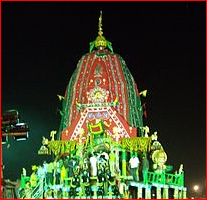
Puri Rath Yatra, the world famous chariot or car festival, at the Puri Jagannath Temple in Orissa. Puri Rath Yatra 2017 date is June 25. It is celebrated on the second day of the Shukla Paksha (waxing phase of moon or bright fortnight) Ashadh month as per traditional Oriya Calendar. On the day of the Ratha Yatra (car festival), chariots (Rath) carrying Lord Jagannath, Balabhadra and Subhadra is pulled to the nearby Gundicha Temple.

The return journey of the chariots or Bahuda Jatra is on July 3, 2017.

At the world famous Puri Jagannath Temple in Orissa, Lord Krishna is worshipped as ‘Jagannath’ – ‘master of the universe.’ Balabhadra is the elder brother of Lord Krishna and Subhadra is his younger sister.
The making of the Rathas for the annual festival begins on the Akshaya Tritiya day. The main rituals associated with Puri Rath Yatra festival is spread over a month and several rituals, like Snana Purnima and Anasara, take place during this period.
The Snana Yatra or Snana Purnima (Bathing Festival) takes place on the full moon day in the month of Jyestha (May – June). On this day, the three deities are bathed in 108 pitchers of water.

After the elaborate Snana Yatra festival, the three deities stay away from public view and this is known as ‘Anasara.’ It is believed that after such elaborate ritualistic bath the deities catch fever and therefore they do not return to the sanctum sanctorum of the temple.

The idols of the three deities then make an appearance after 15 days of ‘anasara’ in a new appearance known as ‘Navaya Yauvana Vesha.’ The wooden idols of the deities are given a fresh coat of paint.
Next auspicious ceremony is the world famous Ratha Yatra. On this day, thousands of devotees pull the three huge chariots carrying Lord Jagannath, Balabhadra and Subhadra through the grand road (Bada Danda) to the Gundicha Temple. The deities visit their aunt here.


The three deities enter the temple of their aunt on the next day and stay there for seven days.

On the fifth day, Goddess Lakshmi, wife of Lord Jagannath, comes in search of him to the Gundicha temple.

On finding his chariot there, she damages Jagannath’s chariot and returns back in anger.

After the week-long stay, the three deities return and the journey is known as Bahuda Yatra.
During the return journey, the chariot of Jagannath stops at the Ardhasani Temple (Mausa Ma temple). Here, Lord accepts his favorite rice cake known as Poda Pitha from his aunt who is the presiding deity of the temple.

The deities reach the Puri Jagannath Temple in the evening and wait outside for the day.
On the next day, the deities are attired in new costumes and this new form of the idols is known as ‘Suna Vesa.’

The following day, the deities move into the sanctum sanctorum of the temple and the Rath Yatra festival comes to an end.

Tuesday, 26 July 2016

Puri Jagannath Rath Yatra

Rath Yatra 2017 date – Puri Jagannath Rath Yatra - Puri Rath Yatra Chariot Festival 2017 date in Puri in India


Puri Rath Yatra, the world famous chariot or car festival, at the Puri Jagannath Temple in Orissa. Puri Rath Yatra 2017 date is June 25. It is celebrated on the second day of the Shukla Paksha (waxing phase of moon or bright fortnight) Ashadh month as per traditional Oriya Calendar. On the day of the Ratha Yatra (car festival), chariots (Rath) carrying Lord Jagannath, Balabhadra and Subhadra is pulled to the nearby Gundicha Temple.

The return journey of the chariots or Bahuda Jatra is on July 3, 2017.

At the world famous Puri Jagannath Temple in Orissa, Lord Krishna is worshipped as ‘Jagannath’ – ‘master of the universe.’ Balabhadra is the elder brother of Lord Krishna and Subhadra is his younger sister.
The making of the Rathas for the annual festival begins on the Akshaya Tritiya day. The main rituals associated with Puri Rath Yatra festival is spread over a month and several rituals, like Snana Purnima and Anasara, take place during this period.

 The Snana Yatra or Snana Purnima (Bathing Festival) takes place on the full moon day in the month of Jyestha (May – June). On this day, the three deities are bathed in 108 pitchers of water.

After the elaborate Snana Yatra festival, the three deities stay away from public view and this is known as ‘Anasara.’ It is believed that after such elaborate ritualistic bath the deities catch fever and therefore they do not return to the sanctum sanctorum of the temple.

The idols of the three deities then make an appearance after 15 days of ‘anasara’ in a new appearance known as ‘Navaya Yauvana Vesha.’ The wooden idols of the deities are given a fresh coat of paint.
Next auspicious ceremony is the world famous Ratha Yatra. On this day, thousands of devotees pull the three huge chariots carrying Lord Jagannath, Balabhadra and Subhadra through the grand road (Bada Danda) to the Gundicha Temple. The deities visit their aunt here.

The three deities enter the temple of their aunt on the next day and stay there for seven days.

On the fifth day, Goddess Lakshmi, wife of Lord Jagannath, comes in search of him to the Gundicha temple.

On finding his chariot there, she damages Jagannath’s chariot and returns back in anger.

After the week-long stay, the three deities return and the journey is known as Bahuda Yatra.
During the return journey, the chariot of Jagannath stops at the Ardhasani Temple (Mausa Ma temple). Here, Lord accepts his favorite rice cake known as Poda Pitha from his aunt who is the presiding deity of the temple.

The deities reach the Puri Jagannath Temple in the evening and wait outside for the day.
On the next day, the deities are attired in new costumes and this new form of the idols is known as ‘Suna Vesa.’

The following day, the deities move into the sanctum sanctorum of the temple and the Rath Yatra festival comes to an end.


Articles Related :-

About the Puri Jagannath Rathas – the size and dimensions
How to Identify the Chariot of Lord Jagannath
How to Identify the Chariot of Balabhadra
How to identify the chariot of Subhadra?
Lord Jagannath and the English word Juggernaut

Thursday, 26 May 2016

Puri Jagannath Ratha Yatra Chariots


Puri Jagannath Ratha Yatra Chariots


The three chariots (Raths) used for the annual PuriJagannath Ratha Yatra are newly constructed each year. A particular family of carpenters owns the hereditary right to construct the chariots. The construction of the chariots begins on the Akashya Tritiya day, which is around three months before the actual Ratha Yatra day. Each chariot used in the Rath Yatra has specific size and dimensions. The chariots are a classic example on indigenous engineering marvel.

Sal wood is used for the construction of the chariots. The wood is brought from the forests of Daspalla and Ranapur. Around 2,188 pieces of wood are needed for the construction of the chariots and these are chiseled out by around 125 carpenters. They work for 58 days at the Mahakhala – the front portion of the Palace located near the Jagannath Temple.

Iron nails, brackets, clamps and other miscellaneous items needed for the chariots are prepared by the native blacksmiths. The structure above the wheels contains eighteen pillars and roofs at various stages. Each chariot contains nine subsidiary deities, two doorkeepers, and one charioteer all of which are made of wood. Apart from this each chariot has a crest banner.

Around 1090 meters of new cloth is used to cover each chariot. Each chariot is fastened with four long ropes manufactured from coconut fibers. The ropes are provided by Kerala Coir Corporation.


CHARIOT OF LORD JAGANNATH

The Chariot of Lord Jagannath is known as Nandighosha. It is also known as Garudadhwaja and Kapidhwaja.
Height: 13’.5m
Number of wheels: 16 (seven feet diameter)
Length and breadth: 34’6” x 34’.6”
Wrappings: Red, Yellow color cloths
Total Number of wooden pieces used: 832
The Rath (chariot) of Lord Jagannath is guarded by Garuda – the mythical bird and vehicle of Lord Vishu. The charioteer is called Dahuka and the flag is named ‘Trailokyamohini.’ The wooden horses driving the chariot are named as Shankha, Balahaka, Suweta, Haridashwa. The rope used to pull is called Sankhachuda. There are nine presiding deities in the chariot – Varaha, Gobardhan, Gopi Krishna, Narasimha, Rama, Narayan, Trivikrama, Hanuman and Rudra.

CHARIOT OF BALABHADRA

The Chariot of Balabhadra is known as Taladhwaja.
Height: 13’.2m
Number of wheels: 14 (seven feet diameter)
Length and breadth: 33’ x 33’
Wrappings: Red, bluish green color cloths
Total Number of wooden pieces used: 763
The chariot of Balabhadra is guarded by Vasudev. The charioteer is Matali and the flag is named ‘Unnani.’ The horses are called Tribra, Ghora, Dirghasharma and Swornanava. The rope used is named basuki. Ganesha, Kartikeya, Sarvamangala, Pralambari, Hatayudha, Mrutyunjaya, Natamvara, Mukteswar, and Shesha deva are the nine presiding deities.

CHARIOT OF SUBHADRA

The Chariot of Subhadra is known as Darpadalana. It is also referred as Padmadhwaja.
Height: 12’.9m
Number of wheels: 12 (seven feet diameter)
Length and breadth: 31’.6’’ x 31’.6’’
Wrappings: Red, black color cloths
Total Number of wooden pieces used: 593
The chariot of Subhadra is guarded by Jayadurga. The charioteer is called Arjuna and the flag is Nadambika. The horses are Rochika, Mochika, Jita and Aparajita. The rope is called Swarnachuda. The nine subsidiary deities in the chariot are all female deities – Chandi, Chamunda, Ugratara, Vanadurga, Shulidurga, Varahi, Shyamakali, Mangala and Vimala.
 

Related Articles :)